Hey guys, I would like to share with you some great news - the registration at Physics Database is up and running.
All you have to do is register with your email address and you will get newest and best physics books reviewed and delivered to your email. In addition, you will reviews of various physics documentaries and other cool stuff. So all you have to do, is check out the website and if you like what you see please support it by registering. Cheers.
Everyone who knows at least the basics of quantum mechanics knows how tricky and counter intuitive this highly successful theory is. Even one of the greatest minds among the developers of quantum mechanics, Richard Feynman, once said that "if you understand quantum mechanics, you don't understand quantum mechanics."
One of the few similarities between classical mechanics and quantum mechanics is that there is a main equation which can be manipulated mathematically to derive the equations which describe how a physical system behaves. For example Newton's law's (+ the law of gravity) can be used to derive almost all the equations needed to describe classical physical systems (pendulums, rolling balls, sliding blocks and all such stuff).Similarly Schroedinger's equation can be manipulated to derive the wave function and the probability distribution, which tells us, for example, where it is most likely to find a particle. So why is it that quantum mechanics has the reputation of one of the most counter intuitive theories of physics?
It's mostly because of many paradoxes, which seem illogical and too strange to be real sometimes. For instance, it's all perfectly normal in terms of the laws ruling the quantum world, for a particle to be in two places at once. Also, a elementary particles and other objects have properties of both waves and particles. And I don't even wanna start talking about strangeness of quantum entanglement and the double slit experiment.
So what all do these paradoxes tell us about reality? After all, it's hard for most of the people to believe that particles in reality can indeed be in two places at once and so on. This is where the opinion of scientists splits - some say there is no objective reality, some say there is some kind of objective reality but it can't be detected (due to the Heisenberg principle) and others believe that quantum mechanics is an unfinished theory. These opinions are reflected in a variety of different interpretations of quantum mechanics.
Actually, I've just found a great article, which talks about various interpretations of quantum mechanics and what they tell us about reality. You can find the link bellow. Also be sure to check out the website it is on. Nova has a bunch of great physics videos as well as amazing library of articles and other useful stuff.
I found a great website with nice articles on physics, education, lectures and other good stuff. It also has this great article with 15 TED talks for physics students. Some of the videos are already featured in my previous post about TED talks about physics, also there are a couple of new ones. So be sure to check this out. Oh and by the way merry Christmas and happy New Year!
So let me ask you something. How many times have you woken up in a cold sweat after a terrible nightmare? I'm sure that you've had this unpleasant experience at least a few times. But how about waking up after the sweetest dream just to realise the sad truth that it's not a dream? I bet it happened to you many times as well. But why am I asking you this? Simply because dreams can help us understand how easy it is to get tricked by something that is not real. After all, some dreams seem so realistic that sometimes you forget which events happened in reality and which you've dreamed off.
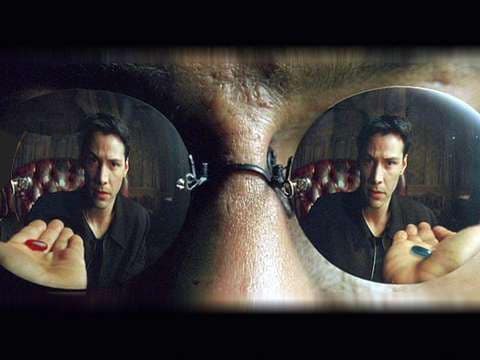
So if dreams are so realistic how can we really know if we are not dreaming now? Or even better how can we know that we are not living in a simulated reality, like the matrix or even a video game? As stupid as it sounds, these theories are gaining some momentum in the world of philosophy and science these days. And when you really think about it, there seem to be no simple arguments against these theories. After all, illusions can seem as realistic as reality is. So let's look a little closer at the idea of a simulated reality.
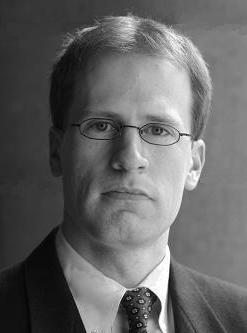
As we've seen in the last article, the idea that reality might be an illusion was popularized by the famous work of Rene Descartes called Meditations on First Philosophy. The modern version of a similar argument that reality is just a computer simulation was proposed by Swedish philosopher Nick Bostrom in 2003. The simple version of Bostrom's argument goes as follows:
i) It is possible that an advanced civilization could create a computer simulation which contains individuals with artificial intelligence.
ii) Such a civilization would likely run many, billions for example, of these simulations (just for fun, for research and other similar reasons).
iii) A simulated individual inside the simulation wouldn’t necessarily know that it is inside a simulation.
Then the ultimate question is — if one accepts that the above premises are at least possible — which of the following is more likely?
a. We are the one civilization which develops AI simulations and happens not to be in one itself?
b. We are one of the many (billions) of simulations that has run?
In greater detail, his argument attempts to prove the trichotomy, either that:
i) Intelligent races will never reach a level of technology where they can run simulations of reality so detailed they can be mistaken for reality (assuming that this is possible in principle);
ii) Races who do reach such a sophisticated level do not tend to run such simulations;
iii) We are almost certainly living in such a simulation.
This argument goes beyond scepticism, (i.e. we cannot be sure if reality is not an illusion) and claims that the odds are that we are actually living in a virtual reality. What's even more interesting that some philosophers believe that eventually beings in a such a simulation would become so advanced that they would create their own simulations, so we could be living somewhere in this web of simulations. But let's forget these crazy ideas for a while and let's imagine that we are indeed living in an advance computer simulation created by some advanced alien race or humans of the future. Would it be possible to somehow detect that our reality is just a simulation?
If you had a choice to find out whether our reality is real, would you choose to know?
Perhaps science hides the answer to this question. Physicist Richard Feynman once said that physics is like sitting in a corner of a huge chess board. Once in a while you see some chess figures moving in a specific way, but you can't see the whole board. So you observe the movement of the figures until you understand how every figure moves. So maybe we are like these lone observers on a huge chess board, which we call the universe. By studying the laws of the universe we are moving closer to understanding the real meaning of it. That's exactly why some scientists believe that if we had the so called theory of everything, which would describe all the laws of the universe in one equation, we could find the meaning of the universe and possibly understand its purpose and we might even find some clues about the architects of the virtual reality that we call our universe.
Another clue about the non-reality of our world would be the so called bugs or system errors of the simulation. These bugs would probably appear as physical anomalies, which we couldn't explain, and would probably occur very rarely. On the other hand, one might argue that a sufficiently powerful simulation would monitor the thoughts of the inhabitants of the virtual reality and delete their memories after the discovery of a bug. Another possibility is that these bugs are a part of our reality, for example some physical anomalies or even some events in our everyday life were never supposed to happen, but they were left in the simulation as deleting them would cause suspicion
Another possibility is that there might be so called Easter eggs (secret messages left by the designers). For example there are many enthusiastic mathematicians who are looking for clues and hidden messages in the numbers of natural constants like pi. The problem with this idea is that it depends on an assumption that the creators want us to find out about the fact that we are living in a simulated reality. Nevertheless, the idea of Easter eggs sounds amazing. It would be a great scenario for a sci-fi movie.
Nick Bostrom about his ideas:
There are many ideas regarding the processing power of the computers that supposedly simulated our reality. Assuming they don't have infinite processing power, we can conclude that there could be a limit to the processing power, which would materialize similarly to pixels in video games that we create. Old video games made for low processing power computers look grainy as you can see every pixel. Whereas modern computers with high processing power make it hard to distinguish between thousands of pixels. Similarly, we could find similar phenomena in the microscopic world. There are scientists who actually think that Heisenberg uncertainty principle is evidence for the limit of processing power of the computers, which simulate our reality.
These are all very interesting ideas, but is it, at least in theory, possible to check them? It seems that the only chance we have is to observe the laws of physics and look for some clues, which would indicate that our universe is just a simulation. Of course one might say that the designers could create our reality in such a way that it wouldn't be possible to detect that it's a simulation from the inside. Still there are actually scientists, who believe that there are some similarities between the laws of the universe and the computer software codes. But, whether it's just another crazy idea or it's actually just crazy enough to be true, nobody knows. Well, only time will tell.
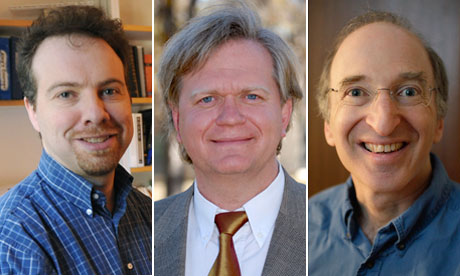
Today is very special day in the world of Physics as the Nobel prize winners in Physics have been announced today (October 4th). The winners of the prestigious prize are Saul Perlmutter (University of California Berkley), Brian P. Schmidt (Australian National University) and Adam G. Riess (Johns Hopkins University). The prize was given for the astonishing discovery of the acceleration of the expansion of the universe through observations of supernovae.
It's really nice to see these guys getting the greatest prize in the world of science as the discovery of the acceleration of the expansion of the universe really shook the world. In a sense this discovery brought physicists to the mystery of dark matter, which is perhaps the biggest secret of Physics these days.
If you wish to reed more news check out these links and video:
So if you're wondering what the hell is going on in CERN these days here's the answer. Check out these great videos about what the hell those crazy neutrinos have been up to.
So we already know that guys at the LHC haven't found the Higgs boson yet, but what's going on at Cern, home of the Large Hadron Collider?
Well, since Cern is home of the biggest particle smasher in the world it's natural that there's a lot of fuzz going on there right now. Recently scientists working at Cern announced baffling results, which appeared during one of the experiments in the Gran Sasso laboratory.
So what they did was basically sent some neutrinos from Cern to Gran Sasso laboratory, which is 732 km. away. The interesting part is that they detected neutrinos coming to the lab a fraction of a second earlier than they should. The calculations of the speed revealed that neutrinos must have covered the distance in a faster-than-light speed.
For those of you who don't remember high school physics, light speed at vacuum is one of the most important and well tested constants in science. For more than a hundred years scientists tested the speed of light and found it to be constant.
"We wanted to find a mistake - trivial mistakes, more complicated mistakes, or nasty effects - and we didn't," said Antonio Ereditato, who was working on the experiment.
Only more independent experiments, which would find the same anomaly would give great evidence that light speed limit is different. However, having in mind that similar anomalies were always resorted, I would bet my money that light speed limit will not be broken.
Physics relies not only on inventive theories, which have formed our understanding of the universe, but also on important experiments, which test our theoretical predictions. So let’s look back to the history of science at the most famous and influential experiments of all time. This is a list of 10 greatest physics experiments in no particular order.
10. Galileo's experiments with rolling balls down inclined planes
This simple experiment contains a board 12 cubits long and half a cubit wide (about 20 feet by 10 inches) and a cut out groove, as straight and smooth as possible, down the center. The experiment procedure is also very simple – a ball is released from the inclined plane, timing the time with a water clock — a large vessel that emptied through a thin tube into a glass. After each run the measurement of time would be compared with the distance travelled.
More about Galileo's Experiments:
Now you might thing that such a childish experiment, wouldn’t give you much insight on the dynamics of moving bodies, but, actually, Galileo Galilei used this experiment to test his understanding of moving bodies. His observations later gave inspiration to the other great science figure – Isaac Newton and his 3 famous laws.
What sorts of things get physicists (or wannabe physicists, like the teacher of this class) excited? Is it the dream of building grand intellectual edifices capable of describing the Universe with amazing accuracy and elegance? Or, perhaps, discovering something so unexpected that it totally blows your mind? Maybe it's simply the act of doing physics! Whatever the case, there are certainly many things in physics to get excited about, and this great video explores them.
Recently I had an amazing opportunity to attend a lecture by the Sir Roger Penrose himself. Roger Penrose is a great mathematician and mathematical physicist working in a variety of fields of physics and mathematics. He is also a very famous author of books such as The Road to Reality, and The Cycles of Time.
His lecture was about trying to answer the question "Can We See Through The Big Bang to Another Universe?". In other words, the lecture was about one of the theories of Roger Penrose, regarding the history and the fate of the universe, the so called cyclic model of aeons.
In conclusion, it was a great lecture. I have to be honest I didn't understand some of the parts, however some really unique and fascinating ideas were presented, which I really liked. And it is needless to say that the feeling of attending a lecture with the top notch physicists and mathematicians was really amazing.
But these aren't the only good news. I happen to found another recording on Sir Roger Penrose lecture about the same topic. I listen through it and it's the same lecture. So here it is and I hope you enjoy it.
Hey guys, we're back again with some of the coolest physics video from around the web. This time a video that I really enjoyed from the rare video lectures of Richard Feynman. It's a lecture about the distinction of past & future. Enjoy!
Thanks for reading and watching. If you like my stuff feel free to comment, subscribe and follow. Cheers!
So you want to learn physics? Good choice! But can you really learn it if you're bad at maths or too old for for college? The answer is yes.
For more than 3 years I've been studying various subjects of physics on my free time and I found many good books and free lectures. The hardest part about self-studying is finding suitable books and lectures. Most of the time you just simply find books that are too hard or too easy, thus it's important to know good authors and lecturers.
So a couple of months ago I stumbled upon a great video lecture of physics from Yale university. Basically it's a part of a project in which universities from all around the world share video lectures with people on the web. This is a general course on physics - it contains a variety of subjects, such as mechanics, special relativity, waves and other classical stuff. For most of the part, maths is fairly straightforward (as much as maths for physics can get).
So here's the link with the free lectures (there is a variety of other free lectures on this website covering astronomy, economics, chemistry and so on):
PS. if you find maths during the video lectures overwhelming you can always check out some great books on maths from the For Dummies series. You can find them here:
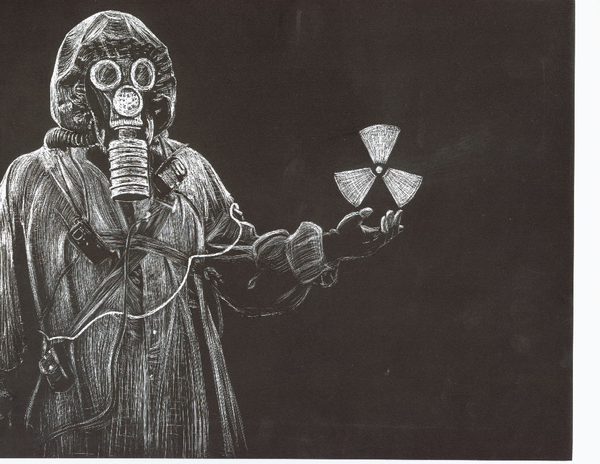
My last post about nuclear bombs and explosions led me to do more research about nuclear explosions and attacks. After all, it's a very fascinating subject, especially these days, when a nuclear war looks more like a fantasy than a reality. But what if...?
What if a nuclear war actually took place these days? Would we be ready? While looking for an answer to this question I found a great lecture by Irwin Redlener, which I would like to share. Enjoy:
While surfing around the web I found many interesting stories and urban myths about science. One of them is about a blind girl who sees a flash on an atom bomb.
A Blind Girl Sees a Flash of an Atomic Bomb
The first story is about an atomic bomb. As the story goes, during a testing of an atomic bomb in 1945 a blind Mexican girl saw the explosion. The interesting part about this story is that it's true. Now, it's quite clear that there are many ways to feel an atomic explosion without actually seeing it in some way. Thus it's not clear how the girl felt the explosion. Still it's an amazing story.
Now I like this story, because it's about atom bombs. I mean there are many subjects, which both scare and fascinate people these days. Ghosts, evil spirits, ufos and other paranormal phenomena - all of these subjects are always popular in the modern myths and legends. However, there is another group of subjects, which are even more fascinating. It's the real stuff. And by that I mean serial killers, unexplained scientific phenomena, terrorist attacks, nuclear explosions and so on. All of these things are even scarier, because they might just happen to you...
Atom bombs fascinated people ever since the first tests and explosions at Hiroshima and Nagasaki in 1945. After all, what can be more fascinating and horrifying at the same time than the most deadliest weapon, which can kill thousands in a matter of seconds. Thus I dug up some interesting facts about nuclear bombs and explosions. Enjoy!
1. There are still some 26,000 nuclear warheads in the world, enough to destroy civilization many times
over and destroy most life on earth. Nuclear weapons make humans an endangered species.
2. More than 95% of all nuclear weapons are in the arsenals of the US and Russia.
3. The average nuclear weapon in the US arsenal is approximately eight times more powerful than the
nuclear bomb that destroyed Hiroshima, immediately killing some 90,000 people.
4. There are currently nine countries with nuclear weapons (US, Russia, UK, France, China, Israel, India,
Pakistan and North Korea).
5) In the aftermath of the Cold War, a variety of
new nuclear threats have emerged. Among these are the following dangers:
• Increased chances of nuclear weapons falling into the hands of terrorists willing to use them;
• Policies of the US government to make nuclear weapons smaller and more usable;
• Use of nuclear weapons by accident, particularly because of decaying Russian infrastructure; and
• Spread of nuclear weapons to other states that may perceive them to be an “equalizer” against a more
powerful state.
6) The cost of US nuclear weapons research,
development, testing, deployment and maintenance has exceeded $7.5 trillion.
7) Cost of the Manhattan Project (through August 1945): $20,000,000,000
8) In ten minutes, a hurricane releases more energy than all the world's nuclear weapons combined!
9) Belarus received 70% of the contamination from Chernobyl.
Neighboring regions are often hit hardest in the event of a nuclear disaster, and that’s been especially true in the case of Belarus. Located just 10 miles away from the Chernobyl Nuclear Power Plant, scientists estimate that this landlocked country was hit by 70% of the radioactive outburst.
10) Nuclear rain from the Chernobyl disaster fell as far away as Ireland.
11) Chernobyl disaster remains the only Level 7 incident on the International Nuclear Event Scale. That is, it's the biggest man-made disaster in human history.
Dan Brown's book "The Lost Symbol" is famous not only for of mason related refrences, but also for a variety of scientific references. Among various references to ancient texts, which contain scientific knowledge similar to our current understanding of science, there's a very interesting theory called noetic theory. So what is noetic theory?
"Noetic theory or noetics (from Greek νοητικός "mental" from νοεῖν "to think" from νοῦς – noûs) is an alternative metaphysical philosophy concerned with the study of mind and intuition, and its relationship with the divine intellect."
In simple words, the main idea of noetic is that human mind can affect the material world. Furthermore, human soul is real and is Bose or photon based.Also noetic studies the so called extrasensory abilities (out of the body experiences, seeing the future and so on).
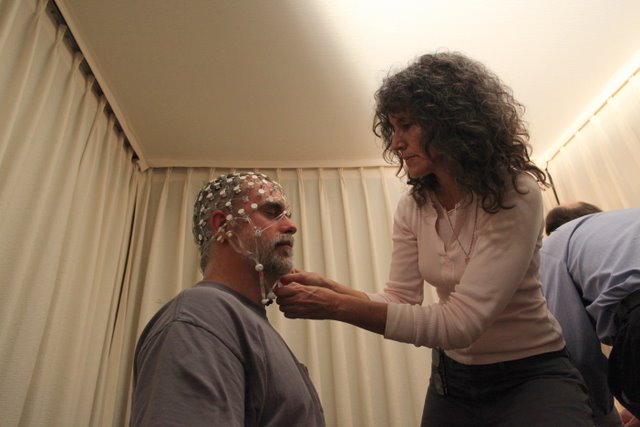
This theory is a very interesting one for a great variety of reasons. First of all, while the mainstream science crosses out telekinesis and other such phenomena as fiction, due to the lack of proof, noetics try to actually investigate human mind powers. Secondly, it has a real institute of noetic science, which clearly shows, that there are scientists who take this subject very seriously and people, who invest their money to support this science.
If you would visit the website of the "Institute of Noetic Science" you would notice that they have a special article about noetic in the "Lost Symbol". It's a very interesting article, which states that noetic experiments mentioned in the novel are actually every day life for noetic scientists.
So is noetic a real science, or is it only pseudoscience, which got famous overnight, when a famous novel popularised it? The only way to find the answer to this question is by analizing the journals, which are available at the website. According to the institute, all that was mentioned in the famous novel has a variety of real research to back it up. All in all only one thing is clear, now, when the noetic science is out of the dark, maybe more people and scientists will become interested in it.
Cosmology is one of the most important branches of physics, however it also has many unanswered questions and mysteries. This article lists the top 10 mysteries of cosmology.
10) When were the first stars formed. What were they like and how they looked? Today we know quite a lot about the history of the universe. According to the big bang theory, the universe started about 13.7 billion years ago. About 3 seconds after the Big Bang, nucleosynthesis set in with protons and neutrons beginning to form the nuclei of simple elements, however it took about 100 000 years for the atoms to form the ordinary matter, which can be found in our universe these days. Later, due to gravitation, various stars formed. We know a lot about star evolution today, however it’s still not clear when were the first stars formed. Hopefully new telescopes will be invented and we will find out even more.
8 ) Why is there an almost empty area of space next to the centre of our galaxy?Scientists believe that in the centre of the Milky Way Galaxy there is a massive black hole. All the stars in our galaxy seem to be orbiting this super massive black hole. However, there also seems to be an empty area of space close to the centre of our galaxy, which according to current scientific knowledge is very strange. According to theory, the black hole at the centre of the universe should eventually attract many stars closer to the centre of milky way. However, observations show that it is not the case. Hopefully new telescopes will shed some light on the problem.
7) Do Black Holes really exist? Everybody knows what a Black Hole is, however, scientists have never observed one directly. It is possible to guess that every galaxy has a Black Hole in the centre of it by various gravitational effects, however it is much more harder to detect a Black Hole directly, because it doesn’t radiate light. Let’s hope in the near future scientists will observe the so called Hawking’s radiation (according to Hawking Black Holes do radiate energy, although very slowly) and he will win his Nobel price.
6) Is it possible to create a quantum gravity theory. The two great theories of the 20th century do a great job when it comes to describing the world of the big (universe, galaxies and so on) and the world of the small (subatomic particles). I am of course talking about the general theory of relativity and the quantum mechanics. According to astrophysicists the first moment of the universe – the big bang started from a singularity. To find out how exactly the universe started it is necessary to join these to big theories, because at the star of the universe all the matter was formed in a microscopic singularity, which had extraordinary strong gravitational properties.
5) How exactly gravity works? Many of the great minds throughout the history tried to answer this question. Newton formulated the law of gravitation, which easily enables to calculate the movement of heavinly bodies to a great degree of accuracy. However, Newton had no idea how that magnificentinvisible force worked. Einstein came up with the famous general theory of relativity, which explained that gravity was the result of the deformation of time and space. Still, there are many questions, like is the space time physically detectable, are gravitons real, do gravitational waves really exist and so on. Many modern experiments are being carried out, which aim to solve some of these problems, however it may take many more years or even another great mind like Newton and Einstein to totally conquer the mystery of gravity.
4) Why is there an arrow of time? Is it possible to turn it around? Most of the laws of physics work great independent of the direction of time, time seems to be running from the past to the future. But why exactly does time only go to one direction? Why is the future different from the past? Also, is it possible to travel back in time?
3) What is Dark Matter? By observing the movement of the galaxies and planets it is possible to find out how much mass is in the various galaxies. Interestingly, the observation show that there’s actually less visible matter in observed galaxies than the theory suggest. This invisible matter is called the Dark Matter.
2) What is Dark Energy? Almost everyone knows that the universe is expanding, even more interesting is that the universe is not only expanding, but also it’s expansion is accelerating. Thus scientists believe that there is some kind of an invisible energy, which is spread throughout all the universe. This energy, which is called Dark Energy, is the cause of the acceleration of the expansion of the universe. However, no one has an idea what exactly it is.
1) What happened before the big bang? Some believe that it was god, who caused the beginning of the universe, others believe in quantum fluctuations, others think our universe was a part of another universe in a multiverse and so on… To be honest, nobody knows what exactly happened before the big bang. It is the ultimate secret of both cosmology and physics. Will we ever find out the answer to this question? Only time will tell.
Ever since the beginning of human kind, humans were fascinated by the concept of time.
It’s probably mostly due to the fact, that time was always a very important thing. Even prehistoric people had their system of measuring time, which was basically watching the stars, the sun and the moon. Later civilizations discovered various clocks, starting with simple sand or sun clocks, ending with complex water clocks. In Middle Ages mechanical clocks were discovered.
As we can see, civilizations throughout the history believed in two different time models. The first one and possibly the earliest was cyclic time model. Most of the ancient civilizations measured time by observing the sun, the moon and the change of the seasons, which naturally led them to think that time runs in cycles. For example in ancient India years were named and once the 60 names are finished, the next year starts with the first name again. Ancient Aztecs also had special calendars divided in cycles. After every cycle, they believed, a new similar cycle starts once again. It’s interesting to notice that the famous Mayan calendar also measured time in cycles. So it’s not true that it ends in 2012, actually only one of the cycles will end at 2012 and then a new cycle will begin.
Another way of thinking about the run of time was linear time model. It’s the most familiar model to us. Perhaps, the best comparison about time was given by Einstein, who said that time is like a river. This river, by the way, can fork, have whirlpools and run in very interesting ways.
The biggest question, when talking about time, is, of course, what exactly time is. What is that magical river, which brings us to the future? It seems that this question is harder to answer than you might think. Let’s see how people throughout various periods of history answered this question.
Many ancient civilizations believed that time, like all the nature, is controlled by the gods. The Vedas, the earliest texts on Indian philosophy and Hindu philosophy dating back to the late 2nd millennium BC, describe ancient Hindu cosmology, in which the universe goes through repeated cycles of creation, destruction and rebirth, with each cycle lasting 4,320,000 years. Ancient Greeks believed that that time, as well as their destiny was controlled by divine deities for the Mount of Olympus. However, ancient Greek philosophers had more sophisticated ideas. Some of them believed that time is infinite – the universe, as well as time had no begging, nor will it have an end. However, there were philosophers, like Zeno, who didn’t believe in any kind of change. Zeno, in his famous paradox (Zeno’s paradox) argued that any kind of change or movement is impossible. This lead to the conclusion, that time is only an illusion.
Philosopher and theologians argued that both universe and time had a beginning, and will have an end. They believed, that time started at the beginning of the universe.
Immanuel Kant, a famous Prussian philosopher, had his own ideas. He believed that time was only an idea like numbers, or dimensions. Kant thought of time as a fundamental part of an abstract conceptual framework, together with space and number, within which we sequence events, quantify their duration, and compare the motions of objects.
Immanuel Kant
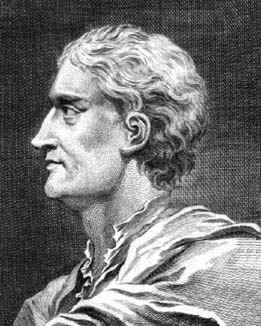
Isaac Newton shared similar ideas. He believed that time is like an arrow, which always goes only one way. He believed that time was universal – it was running at the same rate for all observers.
All of these ideas caused two distinct viewpoints of time among philosophers and scientists. One view is that time is a fundamental part of the structure of the universe. It’s like another dimension, in which events occur like in normal special dimensions. Other point of view is that time is not a part of the structure of the universe. Time, according to this point of view, is not an event, nor a dimension or a thing.
Isacc Newton
The big breakthrough in understanding the nature of time came in the beginning of the XX century. Einstein, with his famous theories (Special and General Theories of relativity) showed that time is not universal. The rate of the clock depends how fast you are moving. Simply speaking, time flow depends on various conditions, which include the velocity of the body. Later in his General Relativity Theory Einstein showed that time also slows down in a gravitational field. These two very important conclusions lead scientists to believing that time actually is a part of the fundamental structure of the universe. Also when Einstein showed that time travel (at least to the future is possible) it became clear that the old view of time as nor a dimension or a thing was wrong.
Now, a century later, we know many wonderful things about time. We know that time is highly connected with the form of Space Time continuum. For instance, if you would spend some time orbiting a huge star, the gravitational field of which is very strong, you would age slower than let us say your twin brother who is spending his days on Earth. We also know that the speed of time flow is connected to the velocity of the body. Another great discovery is the so called arrow of time. It’s clear that time goes from the pas to the future. This makes time a unique dimension. We can freely movie in any of the three special dimensions, but when it comes to time we are prisoners. Scientists believe that the entropy of the universe is the so called arrow of time. In this case entropy can be viewed as a measure of disorder. According to thermodynamics, the entropy of a closed system tends to increase. And since universe is a closed system, entropy in the universe increases steadily. Thus, for instance, a broken cup of coffee, newer comes back to the table and fixes itself as it was traveling back in time.
Albert Einstein
Only one thing is really certain – time is connected to the geometrical properties of the space-time continuum. The newest discoveries of astrophysics gave us many mysteries. Mysterious Dark Matter and Dark Energy are great examples, that we still don’t know many secrets of the Universe and time itself. For instance some scientists believe that time is highly connected to the accelerating expansion of the Universe, which is supposed to be caused by the Dark Energy. This Dark Energy, according to scientists, is constantly changing the form of the Space-time continuum. This means that in order to understand more about the Space-time continuum, the Universe and the time itself we need to understand what Dark Energy is. Even at this moment, due to the Dark Energy, the time itself can be speeding up. All in all, the mysteries of the Dark Energy and Dark Matter hold many secrets of time.
Our generation is a really lucky generation, because we know more about Universe and time than any other generation throughout the history. So let’s hope we will find out the secrets of the universe sooner or later. After all, who wouldn’t like to find out what exactly is the magical river of time.


 9:51 PM
 silentbob14