Showing posts with label book reviews. Show all posts

Wednesday, April 18, 2012

Register at Physics Database


Hey guys, I would like to share with you some great news - the registration at Physics Database is up and running.

All you have to do is register with your email address and you will get newest and best physics  books reviewed and delivered to your email. In addition, you will reviews of various physics documentaries and other cool stuff. So all you have to do, is check out the website and if you like what you see please support it by registering. Cheers.

Tuesday, March 20, 2012

Brand New Website Finished!


So here I am, back after a quite long absence. For those few but amazing fans, who read this blog, I would like to tell that I'm sorry for the lack of updates recently. As you might know, I was working on a brand new website about physics called Physics Database. As you might guess from the title, it contains everything about physics, including book reviews, reviews of documentaries, free ebooks and I'm planning to add a section with physics and science lectures and maybe even a forum eventually. It was a hard job, but I'm happy that it worked out quite easily. 

You can check out the page here: Physics Datbase.com. Be sure to like and subscribe and tell me what you think :) 

Oh and yeah I almost forgot, now since I'll have some free time I'll start posting some productive stuff again. Cheers and have fun.


Tuesday, January 10, 2012

Quantum Man: Richard Feynman's Life in Science by Lawrence Krauss


Year 2011 was a really good year for science literature. Many amazing physics books were released. Both laymen and experts had a pretty big share of various titles. So let's check out this list of top 10 physics books by Physics World.

Physics World's 2011 Books of the Year

I won't comment on all of the books but I would really like to recommend my personal favourite - Quantum Man, which is an amazing book about perhaps the most charismatic physicist ever - Richard Feynman.

After the death of the famous physicist there were plenty of books on the biography of this exceptional personality, so how does this book stand out? The author, who is also a physicist, digs deeper into the head of Feynman, to find out exactly what kind of physicist he was. Krauss even uses some original research papers to find out more about what was going in the mind of this great physicist. This is very refreshing, as the charismatic character of Richard Feynman is well known, yet his theories and thinking process is still a mystery to most.


However, don't worry if your physics is a little bit rusty, as this book is perfectly readable for every physics fan. The author also digs up some amazing new facts from Feynman's biography so even if you already read some books on Feynman don't skip this one.

All in all, it's a great and easily readable book, which offers not only the life story of Feynman, but also digs deeper to the mind of one of the greatest physicists of the 20th century.

Tuesday, November 15, 2011

Secrets of Mental Math by Arthur Benjamin and Michael Shermer


So it's time for another "Book of the Week" review. This time let's look at something fun and simple - a great guide on magic of maths and mental math.


About the Authors:

Arthur Benjamin is a professor of mathematics at Harvey Mudd College in Claremont, California. In addition, he is also a professional magician and performs his mixture of math and magic all around the world. Besides that Michael Shermer is host of the Caltech public lecture series and a contributing editor at Scientific American.


Michael Shermer is an American science writer, historian and the found of The Sceptics’ Society. He is also the chief editor of his magazines Skeptic and a columnist at Scientific American.


Short Review:

Secrets of Mental Math is a great book for those who enjoy maths magic. It will teach amazing math tricks which will surprise yourself and amaze your friends. But it’s not only about magic of mathematics, it’s a great guide to mental mathematics. It covers a  variety of techniques which will not only increase your arithmetic abilities and speed, but will also teach you to do operations on huge numbers in your head. So if you’re a fan of mental mathematics be sure to check this one out.

You can find the book here:


Thursday, October 27, 2011

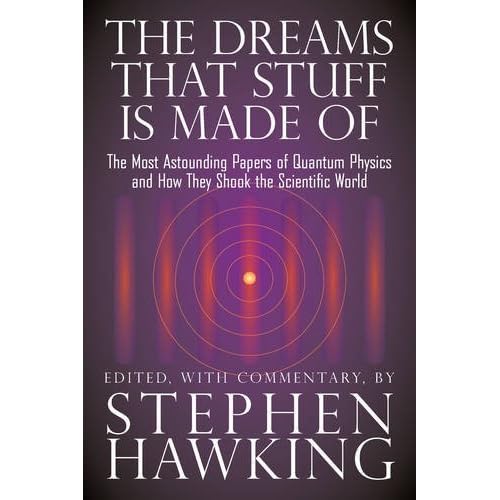
The Dreams that Stuff is Made Of by Stephen Hawking


About the Author


Stephen Hawking is a theoretical physicist who worked for 30 years as a Lucasian professor of mathematics at the University of Cambridge. His research focused mostly on theoretical cosmology, especially black holes. Besides that Stephen Hawking has become widely known for his popular science books like “A Brief History of Time”, “Universe in a Nutshell” and others.


About the Book

The Dreams that Stuff is Made Of is a great guide by the best-selling author Stephen Hawking to the mysterious world of quantum mechanics. With Hawking's insightful commentary the readers are led to the roots of quantum theory. Starting with revolutionary works of Niels Bohr ending with greatest works of Richard Feynman, all the greatest moments in the history of quantum physics are covered in this huge book (1176 pages). As all books by Stephen Hawking, The Dreams that Stuff is Made Of is interesting and complicated science material written in a very readable manner. And of course the fact that all of the greatest works of quantum physics are finally brought together to one volume, makes this book worth having for every physics fan. 

The book can be found here:


Sunday, October 2, 2011

The Grand Design By Stephen Hawking


About the Authors:

Stephen Hawking is a theoretical physicist who worked for 30 years as a Lucasian professor of mathematics at the University of Cambridge. His research focused mostly on theoretical cosmology, especially black holes. Besides that Stephen Hawking has become widely known for his popular science books like “A Brief History of Time”, “Universe in a Nutshell” and others.

Leonard Mlodinov is a physicist and an author. He works in Caltech and Max Planck Institute for physics. His research focuses on various problems of Quantum Mechanics. Besides that he also wrote screenplays for Beyond the Horizon and Star Trek the Next Generation.

Short Review of the Book:

The Grand Design is the newest book of Stephen Hawking and Leonard Mlodinov which focuses on explaining the origins of the universe. In this new book Hawking expresses his position that laws of the universe alone are enough to explain the Big Bang, that is, God as a creation of the universe is not necessary. This as you might guess has caused a little controversy, especially among the religious readers.

The aim of this book is to show how laws of General Relativity and Quantum Mechanics can lead to the spontaneous creation of the universe from nothing. The authors start by describing the evolution of human thought and science and how this lead to the current understanding of the universe. Starting with ancient Greek scholars and revolutionary works on Nicolaus Copernicus , ending with modern M-theory – authors show how centuries of scientific knowledge help us tackle the greatest mysteries of the universe.  

You can find the book here:


Monday, September 5, 2011

Physics of the Future by Michio Kaku Review


About the Author:

Michio Kaku is a professor of theoretical physics in the City College of New York and a co-founder of the famous string theory. Besides that he is one of the most famous science populizers appearing in TV shows, radio and numerous scientific documentaries.

Michio Kaku has written a number of popular science books, mostly focusing on the future of physics and modern theories. The list includes:


Short Review:

The book is written based on interviews with over three hundred of the world's top scientists, who are already inventing the future in their labs. Kaku in this brand new book presents the revolutionary developments in medicine, computers, quantum physics, and space travel that will forever change our way of life and alter the course of civilization itself.

According to Michio Kaku the future will be extraordinary. The ultra fast internet will be in your contact lens. It will recognize people's faces, display their biographies, and even translate their words into subtitles.

What is even more amazing that you will be able to control computers with microscopic sensors implanted in your brains.

So in conclusion this book is another great addition to other Michio Kaku's books. If you have already read his other books you already know what to expect from this one. So if you're a fan of Kaku's books be sure to check this one out as it really gives you a glimpse to the future. 


Wednesday, August 24, 2011

The Fundamental Constants: A Mystery Of Physics Review


Hey guys, I just read this nice book and decided to write a short review. The book was written by a German theoretical physicist Harald Fritzsch, who is famous for his previous books like "The Curvature of Spacetime" and "The Equation that Changed the World".

The first thing that catches your attention when you read the book is that it is written in a dialogue style. In this book a fictional physicist Haller discusses the achievements and mysteries of modern physics with Albert Einstein and Isaac Newton. The biggest advantage of such a writing style is that it is easily readable and most the important questions are answered in such a dialogue. Furthermore, the author really does the job well with this dialogue style as the book feels more like a novel than a scientific book, which is really great.

As for the scientific content - it's really informative and accessible for beginners. The author covers all the basics of particle physics, standard model, particle accelerators and more. The only real drawback is that despite the title of the book only in a small section author really discusses the fundamental constants in depth. Simply speaking the book should be called "The Mysteries of the Standard Model" or something like that, as fundamental constants really play a minor role in the book.

So in conclusion, this book is really nice (despite the fact that the title is a little bit misleading) and I would recommend it for anyone who is interested in particle physics.

Thanks for reading!


You might be interested in:


Monday, July 11, 2011

Time and Space By Barry Dainton Review


All of this writing about time travel reminded me of a good book on philosophy of science by Barry Dainton. So here's a short review.

First of all I would like to say that I really love these philosophy of science books, as you almost don't have to know any university level physics or mathematics to enjoy them. On the same time they usually give you an introduction to science concepts required to understand the book. So these philosophy of science books really seem a great choice for laymen, who hate math equations.


Time and Space is a book about the philosophy of time and space, also it contains a fair share of science for science lovers. The book was first published in 2001 and the 2nd edition in 2010. Its author, Barry Dainton is a professor of Philosophy at the University of Liverpool. He is also an author of two other great books The Phenomenal Self and Stream of Consciousness.

Time and Space  contains 22 chapters covering the most important problems and advances in both physics and philosophy of science regarding space and time. These chapters include The Block UniverseAsymmetries Within Time, Time Travel, Time and Consciousness, General Relativity, String Theory and more

The author can explain concepts of philosophy and science in simple words, which makes this a good book for beginners. Also the book contains nice diagrams and pictures which help you visualising the concepts. Also, as I said, the book has no maths, which is good if you don't like equations. However, simple math concepts are explained through diagrams and pictures, which is great.

All in all, Space and Time, is a great book for philosophy and physics lovers. Even though the book, doesn't have a lot of real physics theory, it's a great starting point for beginners of general relativity and even some string theory.

Thanks for reading! If you enjoy my stuff, feel free to follow, comment and subscribe.


Also if you're too lazy to go to the library, you can buy the book here:

Saturday, April 9, 2011

Review of "The Road to Reality" by Roger Penrose


So recently I managed to buy some great books about physics at a low price and one of them was another great book by Sir Roger Penrose "The Road to Reality".


My first impression when I saw the book at the store was that it was huge, and I mean huge, it has almost 1100 pages. So if you're thinking of buying this book be ready for long weeks of pure maths and science fun. But is it really that fun?

The book starts with some remarks from the author about the notation, which is useful, and some remarks about overall math usage in the book, which is also handy. The prologue is really amazing, as it drags you in, by telling a short story how Pythagoras, who had a hunger for knowledge, joined the brotherhood of 571 wisemen, and began his journey to secrets of mathematics and science. At this point you feel like reading an interesting novel that shows the fun side of science as well as dragging you in with a mysterious narrative. But what is the rest of the book about?

Well, it's about maths and physics of course. It has basically everything covered. And I mean everything! Starting with the roots of physics and mathematics, ending with string theory, quantum mechanics, general and special theories of relativity and even some speculative modern science theories. The book is divided in 34 chapters in total. Also it has some great diagrams and drawings, which really help you understand the physics in some parts of the book. The final part of the book contains some thoughts by the author about the nature of reality itself.

Naturally, every layman would like to know how much maths is used in the book. And the answer is - not that much. But I have to tell you, it's get's quite confusing after a couple of first chapters. And as you progress through the book, maths equations, diagrams and some ideas become incredibly confusing and hard. So I wouldn't recommend this book for those who hate maths or get a headache from even a simple equation. Also the physics is also quite hard, so I recommend this one only for experts.

Also it's worth noticing that almost all concepts of physics are explained from a perspective of mathematical theories and ideas, after all Roger Penrose is famous for mathematical physics, so be ready for more maths than physics.

So the final score:

Content: 9.7/10 ( contains almost everything you need to know about physics )
Beginner "Friendliness":  2/10
Narrative: 6/10 ( start's with a bang, but eventually ends up as another book written in a "dry science" style)
Illustrations: 9/10 (contains some amazing geometrical figures and diagrams)

Overall score 6.7/10

Final verdict: a great book for experts or hardcore science and maths fans, however, a little two confusing for the laymen.


Friday, January 7, 2011

A Great Book to Learn General Relativity


When it comes to GR, it's easy to find good books, which explain you the basics and the non-mathematical side of the subject, however, it's really hard to find a book, which would explain the basics of mathematics of GR in a easy to understand way. Thus I would like to share my experience of reading a book called "Firs Course in General Relativity" by Bernard Schultz.

As the books half title says - "Clarity, readability, and rigor combine in the second edition of this widely used textbook to provide the first step into general relativity for undergraduate students with a minimal
background in mathematics." This is truely the case, because the book is written in a easy to understand way.

The book contais theory, including special relativity in algebraic form and geometric form and general relativity basics. Furthermore, it has some exercises with solved examples.

From my own experience I can say that it's one of the best books to get the basics of both SR and GR. The difficulty level is not over the top like in the most of similar books (I'm a fresher in Physics, and my knowledge in maths and physics is basically enough to read and understand this book). Also, it's a great book to refresh your knowledge of SR and GR.


Thanks for reading!


The book can be found here:


Thursday, January 6, 2011

Noetic Theory?


Dan Brown's book "The Lost Symbol" is famous not only for of mason related refrences, but also for a variety of scientific references. Among various references to ancient texts, which contain scientific knowledge similar to our current understanding of science, there's a very interesting theory called noetic theory. So what is noetic theory?


"Noetic theory or noetics (from Greek νοητικός "mental" from νοεῖν "to think" from νοῦς – noûs) is an alternative metaphysical philosophy concerned with the study of mind and intuition, and its relationship with the divine intellect."

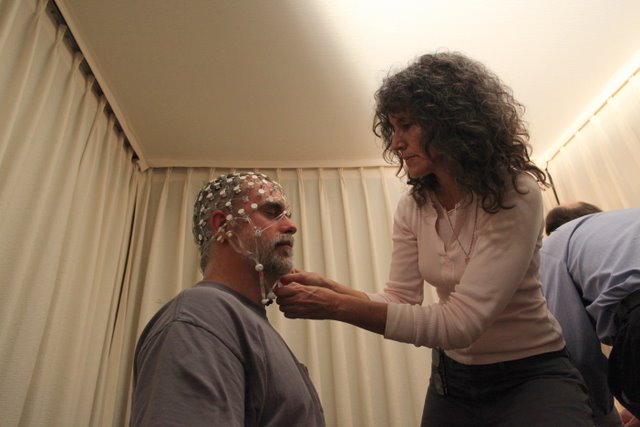
In simple words, the main idea of noetic is that human mind can affect the material world. Furthermore, human soul is real and is Bose or photon based.Also noetic studies the so called extrasensory abilities (out of the body experiences, seeing the future and so on).

This theory is a very interesting one for a great variety of reasons. First of all, while the mainstream science crosses out  telekinesis and other such phenomena as fiction, due to the lack of proof, noetics try to actually investigate human mind powers. Secondly, it has a real institute of noetic science, which clearly shows, that there are scientists who take this subject very seriously and people, who invest their money to support this science.

If you would visit the website of the "Institute of Noetic Science" you would notice that they have a special article about noetic in the "Lost Symbol". It's a very interesting article, which states that noetic experiments mentioned in the novel are actually every day life for noetic scientists.


So is noetic a real science, or is it only pseudoscience, which got famous overnight, when a famous novel popularised it? The only way to find the answer to this question is by analizing the journals, which are available at the website. According to the institute, all that was mentioned in the famous novel has a variety of real research to back it up. All in all only one thing is clear, now, when the noetic science is out of the dark, maybe more people and scientists will become interested in it.

Links:

1) IONS - Institute of Noetic Sciences

2) The Science Behind "Lost Symbol"

3) IONS Library

Thanks for reading!

P.S. be sure to check out this great book:


Design by Free WordPress Themes | Bloggerized by Lasantha - Premium Blogger Themes | Lady Gaga, Salman Khan