




 11:52 AM
 silentbob14

Cosmology is one of the most important branches of physics, however it also has many unanswered questions and mysteries. This article lists the top 10 mysteries of cosmology.
10) When were the first stars formed. What were they like and how they looked? Today we know quite a lot about the history of the universe. According to the big bang theory, the universe started about 13.7 billion years ago. About 3 seconds after the Big Bang, nucleosynthesis set in with protons and neutrons beginning to form the nuclei of simple elements, however it took about 100 000 years for the atoms to form the ordinary matter, which can be found in our universe these days. Later, due to gravitation, various stars formed. We know a lot about star evolution today, however it’s still not clear when were the first stars formed. Hopefully new telescopes will be invented and we will find out even more.
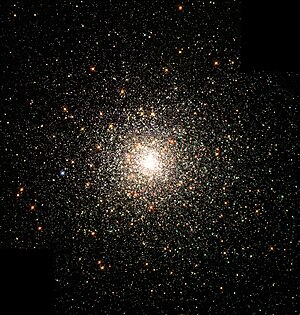 Source
9) Why are the galaxies distributed in clumps and filaments? Sounds very simple, but we still don’t know the answer to this question.
 Source
8 ) Why is there an almost empty area of space next to the centre of our galaxy?Scientists believe that in the centre of the Milky Way Galaxy there is a massive black hole. All the stars in our galaxy seem to be orbiting this super massive black hole. However, there also seems to be an empty area of space close to the centre of our galaxy, which according to current scientific knowledge is very strange. According to theory, the black hole at the centre of the universe should eventually attract many stars closer to the centre of milky way. However, observations show that it is not the case. Hopefully new telescopes will shed some light on the problem.
7) Do Black Holes really exist? Everybody knows what a Black Hole is, however, scientists have never observed one directly. It is possible to guess that every galaxy has a Black Hole in the centre of it by various gravitational effects, however it is much more harder to detect a Black Hole directly, because it doesn’t radiate light. Let’s hope in the near future scientists will observe the so called Hawking’s radiation (according to Hawking Black Holes do radiate energy, although very slowly) and he will win his Nobel price.
 Source
6) Is it possible to create a quantum gravity theory. The two great theories of the 20th century do a great job when it comes to describing the world of the big (universe, galaxies and so on) and the world of the small (subatomic particles). I am of course talking about the general theory of relativity and the quantum mechanics. According to astrophysicists the first moment of the universe – the big bang started from a singularity. To find out how exactly the universe started it is necessary to join these to big theories, because at the star of the universe all the matter was formed in a microscopic singularity, which had extraordinary strong gravitational properties.
5) How exactly gravity works? Many of the great minds throughout the history tried to answer this question. Newton formulated the law of gravitation, which easily enables to calculate the movement of heavinly bodies to a great degree of accuracy. However, Newton had no idea how that magnificentinvisible force worked. Einstein came up with the famous general theory of relativity, which explained that gravity was the result of the deformation of time and space. Still, there are many questions, like is the space time physically detectable, are gravitons real, do gravitational waves really exist and so on. Many modern experiments are being carried out, which aim to solve some of these problems, however it may take many more years or even another great mind like Newton and Einstein to totally conquer the mystery of gravity.
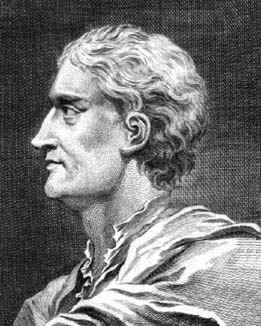 Source
4) Why is there an arrow of time? Is it possible to turn it around? Most of the laws of physics work great independent of the direction of time, time seems to be running from the past to the future. But why exactly does time only go to one direction? Why is the future different from the past? Also, is it possible to travel back in time?
3) What is Dark Matter? By observing the movement of the galaxies and planets it is possible to find out how much mass is in the various galaxies. Interestingly, the observation show that there’s actually less visible matter in observed galaxies than the theory suggest. This invisible matter is called the Dark Matter.
2) What is Dark Energy? Almost everyone knows that the universe is expanding, even more interesting is that the universe is not only expanding, but also it’s expansion is accelerating. Thus scientists believe that there is some kind of an invisible energy, which is spread throughout all the universe. This energy, which is called Dark Energy, is the cause of the acceleration of the expansion of the universe. However, no one has an idea what exactly it is.
 Source
1) What happened before the big bang? Some believe that it was god, who caused the beginning of the universe, others believe in quantum fluctuations, others think our universe was a part of another universe in a multiverse and so on… To be honest, nobody knows what exactly happened before the big bang. It is the ultimate secret of both cosmology and physics. Will we ever find out the answer to this question? Only time will tell.
10) When were the first stars formed. What were they like and how they looked? Today we know quite a lot about the history of the universe. According to the big bang theory, the universe started about 13.7 billion years ago. About 3 seconds after the Big Bang, nucleosynthesis set in with protons and neutrons beginning to form the nuclei of simple elements, however it took about 100 000 years for the atoms to form the ordinary matter, which can be found in our universe these days. Later, due to gravitation, various stars formed. We know a lot about star evolution today, however it’s still not clear when were the first stars formed. Hopefully new telescopes will be invented and we will find out even more.
9) Why are the galaxies distributed in clumps and filaments? Sounds very simple, but we still don’t know the answer to this question.
8 ) Why is there an almost empty area of space next to the centre of our galaxy?Scientists believe that in the centre of the Milky Way Galaxy there is a massive black hole. All the stars in our galaxy seem to be orbiting this super massive black hole. However, there also seems to be an empty area of space close to the centre of our galaxy, which according to current scientific knowledge is very strange. According to theory, the black hole at the centre of the universe should eventually attract many stars closer to the centre of milky way. However, observations show that it is not the case. Hopefully new telescopes will shed some light on the problem.
7) Do Black Holes really exist? Everybody knows what a Black Hole is, however, scientists have never observed one directly. It is possible to guess that every galaxy has a Black Hole in the centre of it by various gravitational effects, however it is much more harder to detect a Black Hole directly, because it doesn’t radiate light. Let’s hope in the near future scientists will observe the so called Hawking’s radiation (according to Hawking Black Holes do radiate energy, although very slowly) and he will win his Nobel price.
6) Is it possible to create a quantum gravity theory. The two great theories of the 20th century do a great job when it comes to describing the world of the big (universe, galaxies and so on) and the world of the small (subatomic particles). I am of course talking about the general theory of relativity and the quantum mechanics. According to astrophysicists the first moment of the universe – the big bang started from a singularity. To find out how exactly the universe started it is necessary to join these to big theories, because at the star of the universe all the matter was formed in a microscopic singularity, which had extraordinary strong gravitational properties.
5) How exactly gravity works? Many of the great minds throughout the history tried to answer this question. Newton formulated the law of gravitation, which easily enables to calculate the movement of heavinly bodies to a great degree of accuracy. However, Newton had no idea how that magnificentinvisible force worked. Einstein came up with the famous general theory of relativity, which explained that gravity was the result of the deformation of time and space. Still, there are many questions, like is the space time physically detectable, are gravitons real, do gravitational waves really exist and so on. Many modern experiments are being carried out, which aim to solve some of these problems, however it may take many more years or even another great mind like Newton and Einstein to totally conquer the mystery of gravity.
4) Why is there an arrow of time? Is it possible to turn it around? Most of the laws of physics work great independent of the direction of time, time seems to be running from the past to the future. But why exactly does time only go to one direction? Why is the future different from the past? Also, is it possible to travel back in time?
3) What is Dark Matter? By observing the movement of the galaxies and planets it is possible to find out how much mass is in the various galaxies. Interestingly, the observation show that there’s actually less visible matter in observed galaxies than the theory suggest. This invisible matter is called the Dark Matter.
2) What is Dark Energy? Almost everyone knows that the universe is expanding, even more interesting is that the universe is not only expanding, but also it’s expansion is accelerating. Thus scientists believe that there is some kind of an invisible energy, which is spread throughout all the universe. This energy, which is called Dark Energy, is the cause of the acceleration of the expansion of the universe. However, no one has an idea what exactly it is.
1) What happened before the big bang? Some believe that it was god, who caused the beginning of the universe, others believe in quantum fluctuations, others think our universe was a part of another universe in a multiverse and so on… To be honest, nobody knows what exactly happened before the big bang. It is the ultimate secret of both cosmology and physics. Will we ever find out the answer to this question? Only time will tell.


