Showing posts with label top 10. Show all posts

Wednesday, September 7, 2011

Top 10 Greatest Physics Experiments: 5. Torsion Bar Experiment


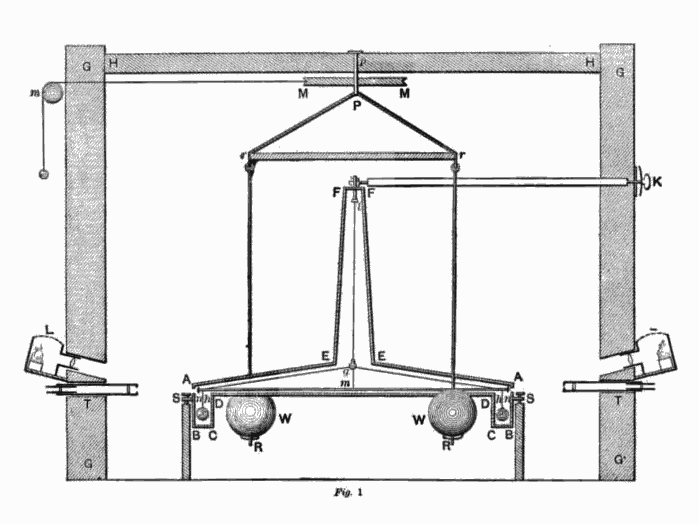
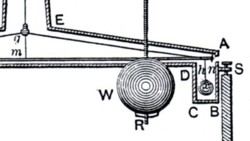
The experiment was performed in 1797–98 by the English scientist Henry Cavendish. He followed a method prescribed and used apparatus built by his countryman, the geologist John Michell, who had died in 1793.
Even though Newton already had calculated the value of the gravitational constant G, it wasn’t confirmed in labarotory. This is where the torsion bar experiment comes into play.

The apparatus employed a torsion balance, essentially a stretched wire supporting spherical weights. Attraction between pairs of weights caused the wire to twist slightly, which allowed the first calculation of the value of the gravitational constant G. The experiment was popularly known as weighing the Earth because determination of G permitted calculation of the Earth's mass. The simple equation of gravity created back at the end of 17 century by Newton was confirmed once again.

Source

Source


Thanks for reading! Please subscribe and comment. Cheers!

Saturday, August 27, 2011

Top 10 Greatest Physics Experiments: 6. Newton's Prism


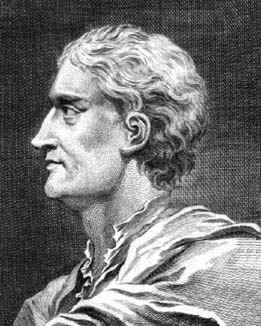
In number 6 we have another giant of physics – Isaac Newton. Newton is famous for his theories on dynamics of moving bodies, invention of calculus and the law of gravitation. However, not many people know that Newton also did many important experiments while investigating the properties of light.

Even though light is not completely understood even today, back in the 17th century, people actually new quite a lot. Ever since the times of Aristotle it was believed that light had some kind of a purest form (or colour), which somehow get’s altered to form other colours. It was believed that rainbows were somehow formed using this principle.

Newton decided to test this prediction by shining a ray of white light through a glass prism. And the result of this is one of the most beautiful experiments in the history of physics.

So what really happens is that white light, which is made up of all the main colours (Red, Orange, Yellow, Green, Blue, Indigo, and Violet) when going through the prism, splits up in the mentioned colours, all leaving the prism at different angles. This is due to the fact that light changes speed when entering a different medium like glass. This depends on a thing called the refractive index of a material, which is different for different colours and different materials. Thus all the colours that make up white light refract at different angles, which is exactly what causes a rainbow pattern to appear.  


Thanks for reading. If you like my stuff please subscribe, follow and comment. Cheers

Wednesday, August 10, 2011

Top 10 Greatest Physics Experiments: 7. Foucault's Pendulum


 There were ideas that the Earth might be rotating around its axis since the days of Nicolaus Copernicus (1473 - 1543). However, even though it was a rational idea, backed up by great arguments in the works of Copernicus, it wasn’t experimentally proven. Thus many people in the middle ages and later epochs weren’t aware of the fact that our planet is rotating around its axis. After all, it’s really hard to believe such a thing, as we can’t feel the Earth’s rotation.

It was Jean Foucault (1819 - 1868) a brilliant French physicist, who finally proved Earth’s rotation experimentally, more than 300 years after the works of Copernicus. Foucault built a 28 kg brass-coated lead bob with a 67 meter long wire from the dome of the Panthéon, Paris, which basically worked as a huge pendulum. The idea of the experiment is very simple – as the pendulum swings, it’s clear that Earth rotates, due to the movement of the ground below the pendulum (which, to us looks like the movement of the plane of the pendulum, as we rotate with together with Earth).


This simple, yet very hard to construct, experiment, finally proved that Earth really rotates. Furthermore, it proved the rotation of our planet in a very simple way, so that even simple people, who knew nothing about science, could easily be convinced. That is why this experiment is one of the most important experiments throughout history.

Thanks for reading! If you like my stuff feel free to comment, follow and subscribe.

You might be interested in:


Friday, August 5, 2011

Top 10 Greatest Physics Experiments: 8. Measurement of the Earth's Circumference by Eratosthenes


Here we have another experiment, which enhanced our knowledge about Earth. However, this experiment is very unique, as it was carried out more than 2000 years ago. 

As the title says it, this experiment was set up to measure the circumference of Earth. Eratosthenes, a Greek mathematician and the librarian of the great library at Alexandria, in Egypt came up with a brilliant idea how to geometrically calculate the circumference of Earth using shadows in two different cities.

Eratosthenes knew that in Syene (a city almost due south of Alexandria) the sun was directly overhead at noon on a particular day of the year. This meant that at noon a yardstick wouldn’t cast a shadow. Also he knew that Sun is so far away that light rays coming from it would basically be parallel. Thus light rays at the same time in Alexandria should cast a shadow (see the diagram)


Now since Eratosthenes knew that the angle between the vertical and the shadow is equal to the central angle inside the circle (diagram). He also knew that there is 360 degrees in a circle. Thus all he needed to calculate Earth’s circumference was the distance between Alexandria and Syene.


To understand this more clearly let’s look at an example. Let us say the central angle is 7.2 degrees. This is an angle between Alexandria and Syene. Thus if we divide 360 by 7.2 we get 50. This means that Earth’s circumference is 50 longer than the distance between the two cities.

So all that Eratosthenes needed to do is pay for someone to measure the distance between the two cities. In case you’re wondering how correct was Eratosthenes, depending on the units that he used, he was somewhere between 1% and 16% off, which is amazing having in mind that the experience took place 2000 years ago. 

Thanks for reading! Please comment, follow and subscribe. Cheers

You might be interested in:

Tuesday, August 2, 2011

Top 10 Greatest Physics Experiments: 9. Galileo’s Experiments With the Falling Bodies


In the late 1500's, everyone knew that heavy objects fall faster than lighter ones. After all, one of the greatest ancient Greek philosophers Aristotle said so. Yet, Galileo, who at the time held a chair in mathematics in the University of Pisa, decided to do an experiment to test out Aristotle’s claims.

Galileo's experiment recreated:


So as the story goes (which is probably not true, but hey, it’s still a great experiment), Galileo threw two objects, one heavy and one light, from the leaning tower of Pisa. As we all know from high school, Galileo proved that lighter objects fall at the same rate as the more massive objects.

Galileo is often regarded as the father of experimental physics, as he was one of the first scientists, who started experimenting to test out theories of the time. The described experiment showed that scientific investigation is by far more important than personal authority of famous scientists and philosophers.

Thanks for reading!

You might be interested in:


Monday, August 1, 2011

Top 10 Greatest Physics Experiments: 10. Galileo's Experiments with Inclined Planes


Physics relies not only on inventive theories, which have formed our understanding of the universe, but also on important experiments, which test our theoretical predictions. So let’s look back to the history of science at the most famous and influential experiments of all time. This is a list of 10 greatest physics experiments in no particular order.


10. Galileo's experiments with rolling balls down inclined planes

This simple experiment contains a board 12 cubits long and half a cubit wide (about 20 feet by 10 inches) and a cut out groove, as straight and smooth as possible, down the center. The experiment procedure is also very simple – a ball is released from the inclined plane, timing the time with a water clock — a large vessel that emptied through a thin tube into a glass. After each run the measurement of time would be compared with the distance travelled.

More about Galileo's Experiments:


Now you might thing that such a childish experiment, wouldn’t give you much insight on the dynamics of moving bodies, but, actually, Galileo Galilei used this experiment to test his understanding of moving bodies. His observations later gave inspiration to the other great science figure – Isaac Newton and his 3 famous laws.

You might be interested in:

Friday, February 11, 2011

The Most Amazing Nuclear Explosions Caught on Tape


While writing a couple of lasts articles about nuclear explosions I had a thought that I've never actually seen a real nuclear explosion caught on tape. And I'm not talking about those fake nuclear explosions in movies, I'm talking about the real deal.

So I decided to look for some great footage of nuclear explosions. Luckily I found some great footage, so I decided to share it with you guys.

So here are some amazing videos with nuclear explosions caught on tape:

First Hydrogen bomb test:


One of the earlier nuclear testings:
 

Underwater nuclear explosion:
 

The most powerful nuclear bomb ever tested - Tsar bomb:


And for desert - 5 biggest nukes:


Thanks for reading!

Friday, January 14, 2011

Mind Blowing Facts About Nuclear Bombs + Chernobyl Disaster


While surfing around the web I found many interesting stories and urban myths about science. One of them is about a blind girl who sees a flash on an atom bomb.

A Blind Girl Sees a Flash of an Atomic Bomb

The first story is about an atomic bomb. As the story goes, during a testing of an atomic bomb in 1945 a blind Mexican girl saw the explosion. The interesting part about this story is that it's true. Now, it's quite clear that there are many ways to feel an atomic explosion without actually seeing it in some way. Thus it's not clear how the girl felt the explosion. Still it's an amazing story.


Now I like this story, because it's about atom bombs. I mean there are many subjects, which both scare and fascinate people these days. Ghosts, evil spirits, ufos and other paranormal phenomena - all of these subjects are always popular in the modern myths and legends. However, there is another group of subjects, which are even more fascinating. It's the real stuff. And by that I mean serial killers, unexplained scientific phenomena, terrorist attacks, nuclear explosions and so on. All of these things are even scarier, because they might just happen to you...

Atom bombs fascinated people ever since the first tests and explosions at Hiroshima and Nagasaki in 1945. After all, what can be more fascinating and horrifying at the same time than the most deadliest weapon, which can kill thousands in a matter of seconds. Thus I dug up some interesting facts about nuclear bombs and explosions. Enjoy!


1. There are still some 26,000 nuclear warheads in the world, enough to destroy civilization many times

over and destroy most life on earth. Nuclear weapons make humans an endangered species.

2. More than 95% of all nuclear weapons are in the arsenals of the US and Russia.

3. The average nuclear weapon in the US arsenal is approximately eight times more powerful than the
nuclear bomb that destroyed Hiroshima, immediately killing some 90,000 people.

4. There are currently nine countries with nuclear weapons (US, Russia, UK, France, China, Israel, India,

Pakistan and North Korea).

5) In the aftermath of the Cold War, a variety of

new nuclear threats have emerged. Among these are the following dangers:

• Increased chances of nuclear weapons falling into the hands of terrorists willing to use them;

• Policies of the US government to make nuclear weapons smaller and more usable;

• Use of nuclear weapons by accident, particularly because of decaying Russian infrastructure; and

• Spread of nuclear weapons to other states that may perceive them to be an “equalizer” against a more
powerful state.

6) The cost of US nuclear weapons research,

development, testing, deployment and maintenance has exceeded $7.5 trillion.

7) Cost of the Manhattan Project (through August 1945): $20,000,000,000


8) In ten minutes, a hurricane releases more energy than all the world's nuclear weapons combined!


9) Belarus received 70% of the contamination from Chernobyl.

Neighboring regions are often hit hardest in the event of a nuclear disaster, and that’s been especially true in the case of Belarus. Located just 10 miles away from the Chernobyl Nuclear Power Plant, scientists estimate that this landlocked country was hit by 70% of the radioactive outburst.

10) Nuclear rain from the Chernobyl disaster fell as far away as Ireland.

11) Chernobyl disaster remains the only Level 7 incident on the International Nuclear Event Scale. That is, it's the biggest man-made disaster in human history.


You might be interested in:


Monday, September 27, 2010

Top 10 Mysteries of Cosmology


Cosmology is one of the most important branches of physics, however it also has many unanswered questions and mysteries. This article lists the top 10 mysteries of cosmology.


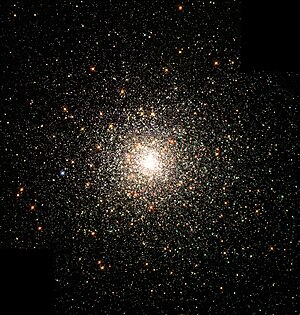
10) When were the first stars formed. What were they like and how they looked? Today we know quite a lot about the history of the universe. According to the big bang theory, the universe started about 13.7 billion years ago. About 3 seconds after the Big Bang, nucleosynthesis set in with protons and neutrons beginning to form the nuclei of simple elements, however it took about 100 000 years for the atoms to form the ordinary matter, which can be found in our universe these days. Later, due to gravitation, various stars formed. We know a lot about star evolution today, however it’s still not clear when were the first stars formed. Hopefully new telescopes will be invented and we will find out even more.

Source


9) Why are the galaxies distributed in clumps and filaments? Sounds very simple, but we still don’t know the answer to this question.

Source


8 ) Why is there an almost empty area of space next to the centre of our galaxy?Scientists believe that in the centre of the Milky Way Galaxy there is a massive black hole. All the stars in our galaxy seem to be orbiting this super massive black hole. However, there also seems to be an empty area of space close to the centre of our galaxy, which according to current scientific knowledge is very strange. According to theory, the black hole at the centre of the universe should eventually attract many stars closer to the centre of milky way. However, observations show that it is not the case. Hopefully new telescopes will shed some light on the problem.


7) Do Black Holes really exist? Everybody knows what a Black Hole is, however, scientists have never observed one directly. It is possible to guess that every galaxy has a Black Hole in the centre of it by various gravitational effects, however it is much more harder to detect a Black Hole directly, because it doesn’t radiate light. Let’s hope in the near future scientists will observe the so called Hawking’s radiation (according to Hawking Black Holes do radiate energy, although very slowly) and he will win his Nobel price.

Source


6) Is it possible to create a quantum gravity theory. The two great theories of the 20th century do a great job when it comes to describing the world of the big (universe, galaxies and so on) and the world of the small (subatomic particles). I am of course talking about the general theory of relativity and the quantum mechanics. According to astrophysicists the first moment of the universe – the big bang started from a singularity. To find out how exactly the universe started it is necessary to join these to big theories, because at the star of the universe all the matter was formed in a microscopic singularity, which had extraordinary strong gravitational properties.


5) How exactly gravity works? Many of the great minds throughout the history tried to answer this question. Newton formulated the law of gravitation, which easily enables to calculate the movement of heavinly bodies to a great degree of accuracy. However, Newton had no idea how that magnificentinvisible force worked. Einstein came up with the famous general theory of relativity, which explained that gravity was the result of the deformation of time and space. Still, there are many questions, like is the space time physically detectable, are gravitons real, do gravitational waves really exist and so on. Many modern experiments are being carried out, which aim to solve some of these problems, however it may take many more years or even another great mind like Newton and Einstein to totally conquer the mystery of gravity.

Source


4) Why is there an arrow of time? Is it possible to turn it around? Most of the laws of physics work great independent of the direction of time, time seems to be running from the past to the future. But why exactly does time only go to one direction? Why is the future different from the past? Also, is it possible to travel back in time?


3) What is Dark Matter? By observing the movement of the galaxies and planets it is possible to find out how much mass is in the various galaxies. Interestingly, the observation show that there’s actually less visible matter in observed galaxies than the theory suggest. This invisible matter is called the Dark Matter.


2) What is Dark Energy? Almost everyone knows that the universe is expanding, even more interesting is that the universe is not only expanding, but also it’s expansion is accelerating. Thus scientists believe that there is some kind of an invisible energy, which is spread throughout all the universe. This energy, which is called Dark Energy, is the cause of the acceleration of the expansion of the universe. However, no one has an idea what exactly it is.

Source


1) What happened before the big bang? Some believe that it was god, who caused the beginning of the universe, others believe in quantum fluctuations, others think our universe was a part of another universe in a multiverse and so on… To be honest, nobody knows what exactly happened before the big bang. It is the ultimate secret of both cosmology and physics. Will we ever find out the answer to this question? Only time will tell.

Sunday, July 18, 2010

So You Want to Learn Physics (The Fun Way)


These days when internet is easily accessible, it's easy to learn anything you like from home. Internet, being the biggest virtual library, gives you an opportunity to learn various science fields as well. Today I will show you some nice books that you can easily find on the internet. These books helped me to learn various subjects an get better at high school.

If you want to learn physics you should start from simple high school level physics, however there are some very nice books, which can teach you the basics of quantum mechanics, string theory, general and special theories of relativity and other.

There's a very nice book about time travel, which covers many aspects of general relativity, special relativity, quantum mechanics and some history of physics. This book is called Black Holes Wormholes and Time Machines by Jim Al-Khalili. It's a simple to read book that contains basically no maths, so it can be read by anyone.


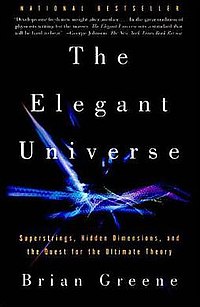
Another great book for those, who want to learn the basics of modern physics is Elegant Universe by Brian Greene. This book also covers the basics of Einstein's theories, quantum mechanics and some history of physics. The main focus of the book is string theory.


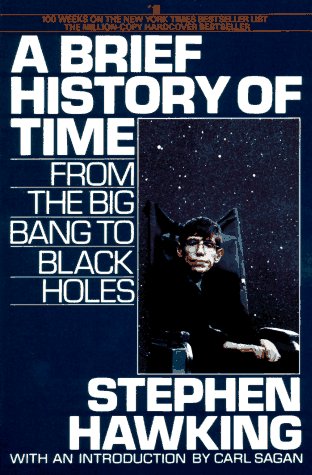
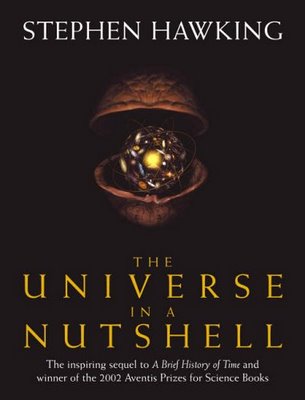
After reading these books, you could find Stephen Hawking's books useful. The most popular of his books are The Brief History of Time and The Universe in a Nutshell.  Both of the books cover a wide range of physics subjects, are easy to read and contain some valuable knowledge.


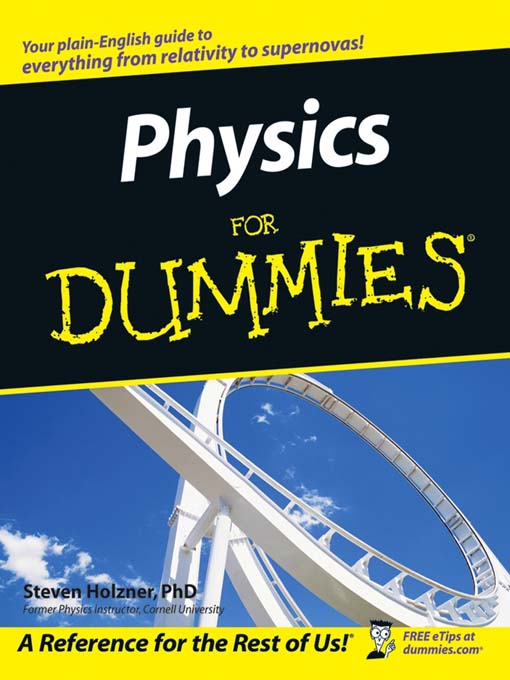
The series of books called For Dummies contain a lot of useful books, basically about anything. You can find many useful books like The String Theory for Dummies, Physics for Dummies and so on.  I highly recommend these books for starters, because they're easy to use and contain all that a starter needs.


Well that's it for now. Thanks for reading. I hope these books, will be useful for you. Please subscribe or follow my blog if you like it.

Thursday, May 6, 2010

The List of The Greatest Child Prodigies


Design by Free WordPress Themes | Bloggerized by Lasantha - Premium Blogger Themes | Lady Gaga, Salman Khan